
Angle Cock for Bathroom: How to Choose the Right One
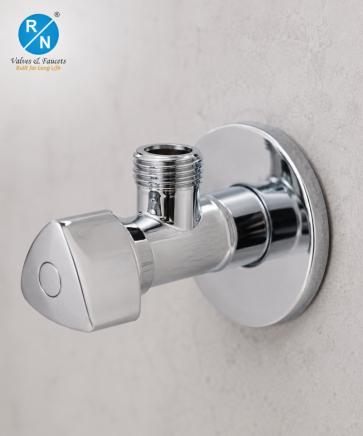
If you've ever stood in a hardware store staring at a wall of shiny valves wondering what makes one different from another, you're not alone. An angle cock with flange looks like a small, forgettable part of a bathroom, but it's the thing standing between your wall pipe and a flooded floor if it's chosen or installed badly. It controls water flow to a faucet, geyser, or flush tank, and the flange — that little decorative ring at the base — does more than just look tidy.
Most homeowners only think about this fitting when the old one starts leaking around the wall joint. By then it's usually too late to shop carefully, and people grab whatever's on the shelf. Knowing what to look for ahead of time saves that scramble.
What the Flange Is Actually For
The flange sits where the valve meets the wall, covering the rough pipe stub and any uneven plaster around it. Without one, you'd see raw pipe threads and patchy tile work every time you looked at the wall behind your basin.
But it's not purely cosmetic. A loose or poorly fitted flange lets water creep behind the wall over time, which is how bathroom walls end up with hidden dampness and eventually peeling paint two rooms away. A flange that sits flush and tight against the wall, ideally with a rubber washer underneath, keeps that moisture where it belongs — inside the pipe.
Brass vs. Everything Else
Nearly every quality angle cock is made from brass, and there's a good reason this hasn't changed in decades. Brass resists corrosion from both water and the chlorine used in municipal supply lines, it doesn't turn brittle with age the way some plastics do, and it holds a chrome or matte finish well over years of handling.
Cheaper alternatives made from zinc alloy or low-grade brass blends look identical on a shelf but behave very differently after a year of daily use. Here's a rough comparison based on how these materials typically hold up:
| Material | Corrosion Resistance | Typical Lifespan | Common Failure Point |
| High-grade brass (CW617N) | Excellent | 12–15+ years | Rare, usually washer wear |
| Standard brass blend | Good | 6–8 years | Slow leaks at spindle |
| Zinc alloy | Poor to moderate | 2–4 years | Cracking, internal corrosion |
| Plastic/PVC | Weak under heat/pressure | 1–3 years | Brittleness, flange cracking |
This is why asking a supplier what grade of brass they use isn't a nitpicky question — it's the single biggest factor in whether you're replacing this fitting again in three years or not thinking about it for a decade.
A Few Things to Check Before Buying
- Thread type — BSP threads are standard across most of India and much of Asia, while NPT is more common in North American plumbing. Mixing the two without an adapter causes leaks no matter how well the valve is made.
- Spindle mechanism — quarter-turn ceramic disc spindles operate smoothly for years; older rising-stem designs need more turns and wear out faster with frequent use.
- Flange fit — a flange that's too small won't hide wall imperfections, and one that's the wrong shape for the wall pipe will sit unevenly no matter how tightly it's screwed down.
- Finish coating — chrome-plated brass resists water spotting better than a plain polished or matte finish, particularly in areas with hard water.
Installing or Replacing One: The Basic Steps
- Shut off the main water supply line before touching anything — even a "closed" angle cock can still hold residual pressure.
- Remove the old fitting using a wrench, wrapping the jaw in cloth to avoid scratching surrounding tile or fixtures.
- Clean the exposed pipe threads and check for any corrosion or damage before fitting the new valve.
- Wrap the threads with PTFE tape, wound in the direction the valve will be tightened, not against it.
- Hand-tighten the new angle cock, then use a wrench for the final quarter turn — overtightening cracks flanges more often than undertightening causes leaks.
- Turn the water supply back on slowly and check the flange base and spindle for any weeping before considering the job done.
Why Sourcing Matters as Much as the Product
A lot of buyers assume one brass valve is basically the same as another, but manufacturing tolerances vary a surprising amount between suppliers. A valve manufacturer in India with an established brass casting process tends to produce more consistent wall thickness and thread precision than smaller operations cutting corners on raw material grade to hit a lower price point.
If you're buying in bulk for a construction project or simply want a fitting that won't need replacing in two years, it's worth going directly to a brass valve manufacturer rather than a generic hardware reseller. Companies like RN Valves work specifically with CW617N-grade brass casting, which is the kind of detail that matters far more than the finish color once the valve is behind your wall.
The Final Word
An angle cock with flange is easy to overlook until it fails, and by then you're usually dealing with water damage instead of a simple swap. Stick with high-grade brass, match your thread type correctly, and don't assume every flange fits every wall the same way. A brass valve manufacturer that's transparent about material grade and casting process is worth more than a slightly lower price tag from a supplier who won't answer that question directly.
Recent Post
-
Angle Cock With Flange: Complete Guide t...
04 Sep 2026 -
PTMT Faucet for Indian Bathrooms and Cha...
18 Aug 2026 -
PTMT Taps Company for Durable Bathroom a...
06 Aug 2026


