
DIY Plumbing Fixes: From Clogged Drains to Leaky Faucets
Most plumbing problems don't start big. A drain gets a little slower every week until one day it barely moves at all. A faucet drips once an hour, then once a minute, and by the time anyone calls a plumber, it's been going on for months. The good news is that a surprising number of these issues — slow drains, dripping faucets, running water at odd hours — can be handled without a service call, if you know what you're looking at and don't rush the job.
I'm not going to pretend every plumbing issue is a DIY job. Anything involving a main line, gas connections, or a wall you'd need to open up should go to a licensed plumber. But clogged drains and leaky faucets are two of the most common household repairs, and they're also two of the easiest to get wrong in ways that cost more later. Here's how to actually fix them.
How to Unclog a Drain Without Making It Worse
The instinct most people have is to reach for a bottle of chemical drain cleaner. That's usually the wrong first move. Those products can eat through old pipe seals, and if the clog doesn't clear, you're now dealing with a pipe full of caustic liquid that a plumber has to work around.
A better approach, in order:
- Try boiling water first. Pour it down in stages, waiting about 30 seconds between pours. This works well on soap scum and light grease buildup, less well on hair clogs.
- Use a plunger with actual force. A sink plunger (the flat-bottomed kind, not the flanged toilet type) needs a tight seal and firm, repeated pushes — not gentle taps.
- Try a drain snake or a bent wire hanger. For bathroom sinks, most clogs sit within the first two feet, usually tangled hair and soap residue. A cheap plastic drain stick with barbs works better than people expect.
- Remove and clean the P-trap. This is the curved pipe under the sink. Put a bucket underneath, unscrew the slip nuts by hand or with pliers, and check inside — this is where a lot of stubborn clogs actually live.
If none of that clears it and water is backing up in multiple fixtures at once, that's usually a sign the clog is further down the line, and it's time to call someone.
How to Fix a Leaky Faucet (It's Usually One of Three Things)
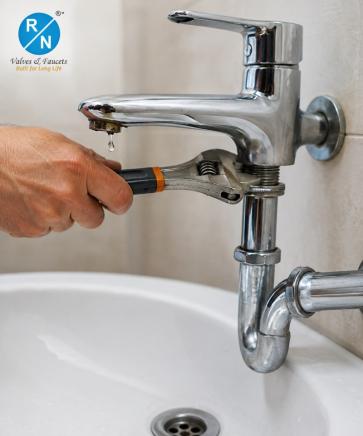
A dripping faucet almost always comes down to a worn internal part, not a design flaw. Figuring out which part is worn saves you from replacing the whole fixture unnecessarily.
| Symptom | Likely Cause | Typical Fix |
| Steady drip from the spout when off | Worn washer or O-ring | Replace washer/O-ring in the cartridge |
| Water leaking from the base of the handle | Damaged O-ring at the handle stem | Replace stem O-ring |
| Handle feels loose or wobbly | Worn cartridge | Replace the cartridge entirely |
| Leak only under high pressure | Cracked valve seat | Replace valve seat or full cartridge |
Before touching anything, shut off the water at the valves under the sink, then open the faucet to release remaining pressure. Most modern faucets use a cartridge system rather than the old rubber-washer compression style, so once you pop off the handle cap and unscrew the retaining nut, the cartridge usually lifts straight out. Bring the old one to a hardware store to match it exactly — cartridges aren't universal across brands.
When It's Time to Replace the Whole Faucet Set
Sometimes a leak isn't worth chasing. If a faucet is more than 10-12 years old, or if you're already replacing a second or third internal part within a year, it's usually cheaper long-term to swap the whole unit rather than keep nursing it along.
This is where the material of the faucet body actually matters. A lot of budget faucets sold as a water faucet for bathroom use are made from zinc alloy, which corrodes faster once the plating wears through. PTMT faucet models — PTMT stands for Polytetrafluoroethylene Modified Thermoplastic, a reinforced plastic — have become popular as a lighter, corrosion-resistant alternative, especially in areas with hard or mineral-heavy water. Brass with a ceramic disc cartridge is still the longest-lasting option overall, but PTMT has closed the gap in mid-range fixtures considerably.
If you're comparing options, checking specs directly with a manufacturer that focuses specifically on valves and faucet hardware, like rnvalves, tends to give clearer material and pressure-rating details than a general hardware listing does.
A Few Habits That Prevent Most of This
- Run hot water down bathroom drains once a week to keep soap buildup from hardening.
- Don't overtighten faucet handles when shutting them off — that's what wears down washers and O-rings faster than normal use.
- Check under-sink shutoff valves twice a year to make sure they still turn freely, so you're not fighting a stuck valve during an actual emergency.
The Final Word
Clogged drains and leaky faucets are annoying, but they're rarely mysterious once you know where to look. A slow drain is almost always a P-trap or the first couple feet of pipe. A dripping faucet is often caused by a worn-out washer, cartridge, or O-ring. Handle those two things early, and you'll avoid the bigger, more expensive plumbing calls that come from ignoring small problems for too long.
Recent Post
-
DIY Plumbing Fixes: From Clogged Drains ...
04 Sep 2026 -
Best Bathroom Faucets for Indian Homes a...
18 Aug 2026 -
Bathroom Taps and Fittings: Complete Gui...
30 Jul 2026


